Have you ever considered how your skillset and experiences could translate into heritage or museum work?
Everyone who works in the GLAM (Galleries, Libraries, Archives & Museums) sector has a unique career pathway. However, with the ongoing incredible financial pressures on this industry, and seeing fellow organizations we know and love in Victoria recently closing, we recognize that it can be difficult to see yourself beginning a heritage or museum career.
There is no blueprint for a career, but in this #MeetMMBC series of blog posts, staff at the Maritime Museum of BC want to share how they got into their field of museum work, and what industries, skills, and contacts helped them along the way.
What is your name and what do you do?
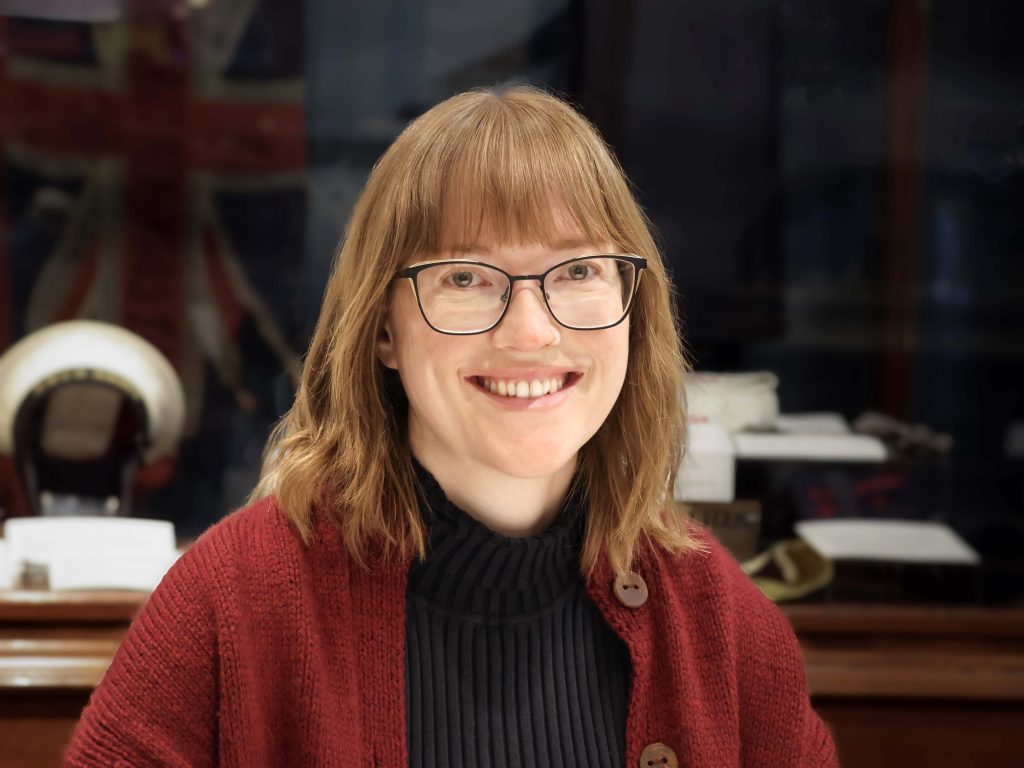
Hello! My name is Rosemary Kemp, and I am Curator with the Maritime Museum. My role is focused on the documentation, care, development, presentation, and interpretation of the collection.
What was your first museum role?
My first museum role was at the Art Gallery of Greater Victoria, working at the front desk and gift shop, and hosting events.
Did you find any degree or diploma programs useful for museum work?
Yes!
My undergraduate was a Bachelor of Arts in Psychology and Greek & Roman Studies from the University of Victoria. Although it might seem an odd combination for a career in museums, that degree instilled in me a fascination with the real people who make up our histories. I later returned to UVIC to complete a Diploma in Cultural Resource Management which provided a solid practical base for museum work.
I also hold a Master of Art History from Concordia University in Montreal, with a focus on material culture and preservation. The professors and my supervisor Dr. Johanne Sloan were fantastic, and I was fortunate to dig into a diversity of new perspectives and topics in heritage and the arts.
Have you worked outside the GLAM sector, and has that contributed to your museum work?
I have had many jobs outside the GLAM sector, from working as support staff in a group home, to being dock crew with the Victoria harbour authority. In different ways, I believe all those jobs have been useful in my arts career. My first job was teaching sailing at summer camps in Calgary AB at the Glenmore Sailing School. The terminology and mechanics of sailing have been very useful in my position with the Maritime Museum, but I also developed leadership, patience, and safety-consciousness that have been incredibly important for my career as a museum professional.
Have you completed co-op or intern terms of work? Were they paid or unpaid?
I have had several paid internship positions through Young Canada Works (YCW) that were essential for gaining me valuable work experience in the field.
My first YCW position was as the Collections Assistant with the Art Gallery of Greater Victoria. My second YCW position was at ARCMTL in Montreal working with an eclectic archival collection representing underground culture in Montreal. I found both jobs very educational on the inner, hands-on workings of a collection, and both set me up well for future job openings in those organizations.
In the GLAM sector, what has been your breakdown of full-time vs. part-time or casual work, and permanent vs. temporary contract work?
Outside of short-term student internships, most of my positions in the GLAM sector have been part or full-time contract positions, usually renewable on a yearly basis. As I have progressed in my career, I have been fortunate to find full-time, permanent positions.
Have you been mentored?
Yes! I feel incredibly fortunate to have had two amazing mentors who taught me most of what I know about good collections management, care, preservation, and documentation. I met Lesley Golding and Corey Bryson while working at the Art Gallery of Greater Victoria as a summer student in the Collections department. They were both incredibly generous with their time, and sharing their extensive collections knowledge, skill, and professionalism with me. In many ways I feel that the best education I have had in collections work has been through their mentorship and guidance. They have continued to be wonderful friends and colleagues throughout many years!
Why do you do museum and heritage work?
One reason is the people I get to work with – I love the diversity of the people and roles that a museum requires to operate smoothly. The teams I have worked with are always so multifaceted but united by a common love for learning, history, and creativity.
The reason I have built a career specifically working with collections, is because of the blend of practicality and theory that the work requires. I can satisfy the nerdy side of myself that loves to do a deep dive into research, but also lose myself in a meticulous physical
task like relabelling a group of objects. I can be both a specialist and generalist, and I am constantly learning new things.
I view my role as a steward for the history and information contained and embodied in those objects. It is a privilege to be part of safeguarding the collection and knowledge for both present and future generations. I care deeply about the work I do, and am so grateful to be working with the Maritime Museum!
Do you have any advice for your future colleagues in the GLAM sector?
My advice for someone wishing to develop a career in the GLAM sector is to be persistent, willing to learn, easy to work with, and to get as much practical experience as possible. The practical experience is sometimes difficult to get because of the limited funding in GLAM organizations, so volunteering and internships are great ways to gain some experience and build good connections.
I would also advise people to consider what type of work environment you enjoy. If you enjoy working with people, consider a career in programs; if you prefer solitary, detail-oriented work, consider a career in collections.